
Invoicing and Payment Chasing for Resident Communication

Updated: 21 hours ago
Table of Contents
Why Resident Payment Chasing Needs a Different Approach
Quick Comparison: Top Tools for Resident Invoicing and Payment Chasing
How We Evaluated These Tools
Xero: Best for Accounting-Led Property Businesses
Chaser: Best for Automated Payment Reminders for Residents
FreshBooks: Best for Independent Property Managers and Contractors
Zoho Invoice: Best Free Option for Small Portfolios
How to Handle Resident Payment Disputes Without Damaging Relationships
Late Payment Email Templates for Property Management
Frequently Asked Questions
Last Updated: September 27, 2026

Why Resident Payment Chasing Needs a Different Approach
Payment chasing is the process of following up on overdue invoices to collect outstanding balances, and in residential property it works very differently from business-to-business debt collection. You are not chasing a supplier's accounts payable team. You are chasing someone's home.
That changes everything about tone, timing, and channel. A firm final notice that works on a commercial client can read as a threat to a resident already stressed about money. Get it wrong and you damage the relationship, invite a complaint, and create a vacancy that costs far more than the invoice you were pursuing.

At Prolink Property Support, we handle invoicing and payment chasing for property managers and trade professionals every week, and the pattern is consistent: the businesses that collect fastest are not the ones with the harshest penalties, but the ones with clear payment terms, automated follow-ups, and a paper trail that stands up if a dispute escalates.
Below, we compare the tools that handle this well, then show you exactly how to chase payment without losing the resident.

Quick Comparison: Top Tools for Resident Invoicing and Payment Chasing
The best tool for most property businesses is one that automates reminders while keeping the message human.
Tool | Starting Price | Best For | Standout Feature |
Xero | £15/month | Accounting-led property businesses | Bank feed reconciliation |
Chaser | £15/month | Automated resident reminders | SMS payment chasing |
FreshBooks | £12/month | Independent managers and contractors | Late fee automation |
Zoho Invoice | Free | Small portfolios on a budget | Unlimited free invoices |
How We Evaluated These Tools
We assessed platforms on four criteria: how well they automate payment reminders without sounding robotic, how easily they integrate with existing accounting software, whether they support multi-channel communication, and how they handle late fees and audit trails.
Pricing matters, but it was not the deciding factor. A tool that saves two hours of admin a week pays for itself long before a cheaper tool that leaves you chasing manually. The Information Commissioner's Office guidance on data protection is also worth reviewing before you automate any resident communication, since reminder emails and SMS messages both involve personal data.
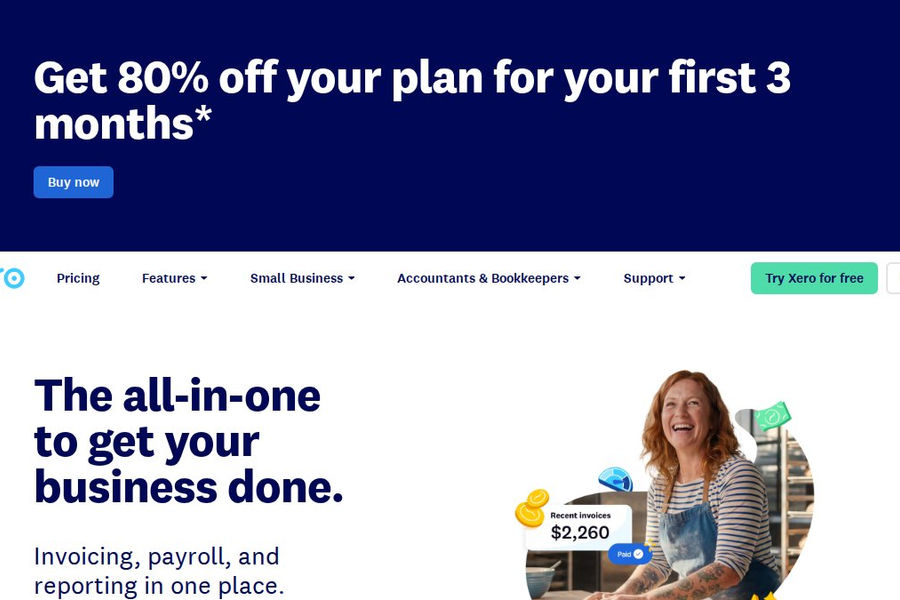
Xero: Best for Accounting-Led Property Businesses
The dashboard is good for tracking overdue invoices at a glance. Where it falls short is advanced reporting, which sits behind higher-tier plans, and the reminders are functional rather than warm. For a firm with a bookkeeper already in Xero, that trade-off is usually worth it.
Chaser: Best for Automated Payment Reminders for Residents
The audit trail is the feature most reviews skip, and it matters when a resident disputes whether they were ever reminded: every message is logged. Chaser needs an existing accounting platform, so it works alongside Xero or QuickBooks rather than replacing them.
FreshBooks: Best for Independent Property Managers and Contractors
The mobile app is strong, which matters if you manage a portfolio between site visits. The limitation is scale: above a few hundred properties, reporting and reconciliation feel stretched. For an independent manager or a trade professional billing residents directly, it is a clean fit.
Pro Tip Set your reminder schedule before you send a single invoice. A first nudge three days before the due date, a second on the day, and a third a week after prevents most late payments without a single awkward phone call.
Zoho Invoice: Best Free Option for Small Portfolios
It lacks the deep accounting features of Xero or QuickBooks, so you will outgrow it if your portfolio expands. As a starting point for digital invoicing and basic automated follow-ups, nothing else here comes close on cost.

How to Handle Resident Payment Disputes Without Damaging Relationships
Most disputes are not about refusal to pay. They are about an unresolved maintenance issue, an unrecognised charge, a timing problem, or a communication that never arrived. Treating every dispute as a payment problem rather than a service problem is the fastest way to turn a recoverable balance into a formal complaint.
The mechanism is straightforward. A resident who feels heard moves into problem-solving mode; a resident who feels processed moves into defence mode, which is slow, expensive, and often ends in a formal challenge. That is why the order of operations below matters more than the wording of any single message.
Work through it in this order:
Acknowledge the dispute in writing within one working day. Silence reads as escalation, and a written acknowledgement creates the timestamp that protects you later.
Pause automated reminders on that invoice while the query is open. Continuing to chase a balance under review is one of the most common triggers for a formal complaint.
Pull the paper trail. Check the invoice, the work order, the lease or tenancy clause that authorises the charge, and any communication about the job before you respond.
State what you found, plainly. If the charge was wrong, credit it. If it was right, explain what it covered and which clause or agreement it sits under.
Agree a settlement in writing. Confirm the amount, the payment date, and the method, and send it to the resident so there is no ambiguity about what was agreed.
Log the outcome so the next reminder cycle reflects it and the next person who deals with the account is not starting from scratch.
Where residential disputes differ from commercial ones is in the escalation boundary. For a commercial debt, the statutory late payment framework allows interest and recovery costs once the debt is overdue.
Never let automated reminders keep running on an invoice a resident has formally disputed, and never add interest or recovery charges to a residential account unless the tenancy agreement or lease explicitly permits it. Both are common triggers for a formal complaint and both weaken your position if the matter escalates to a redress scheme or tribunal.
Disputes are resolved by sequencing, not by pressure. Acknowledge in writing, pause the automation, pull the paper trail, answer the service question before the money question, and confirm the settlement in writing. That sequence protects the relationship and the recovery at the same time.
Late Payment Email Templates for Property Management
Stage | Timing | Channel | Purpose |
Pre-due nudge | 3 days before due date | Confirm the invoice is visible and the payment link works | |
Due-date reminder | On the due date | Portal notification | Low-friction prompt for residents who live in the portal |
First overdue | 3 days late | Email + SMS | Reach residents who do not check email regularly |
Second overdue | 10 days late | SMS + portal | Short, direct, with a payment link |
Final notice | 21 days late | Email, letter, and logged call | Creates the paper trail that matters if the matter escalates |
Do not apply commercial late-payment interest or recovery charges to a residential account unless the tenancy agreement or lease explicitly allows it. A charge that is not grounded in the contract is very difficult to defend if the resident complains to a redress scheme or the matter reaches a tribunal.
Hi [NAME], invoice [NUMBER] for [AMOUNT] is now overdue. Pay here: [LINK]. Any questions, reply to this message.
Before you send any SMS reminder, check that the resident has consented to being contacted by text and that your privacy notice covers it. Reminder messages contain personal data, and the Information Commissioner's Office guidance on data protection sets out what that means in practice.
Frequently Asked Questions
How to chase payment politely while maintaining resident relationships?
Start with a friendly reminder email that assumes good faith, referencing the invoice number and due date. Use a professional tone and avoid accusatory language. If payment is overdue, follow up with a phone call during business hours. Automation tools can help ensure these reminders arrive consistently without sounding personal. Always offer a clear way to pay, such as a payment portal link, and document every interaction for future reference.
What are the legal requirements for late payment interest in the UK?
Under the Late Payment of Commercial Debts (Interest) Act 1998, businesses can charge statutory interest on overdue commercial invoices, currently set at 8% above the Bank of England base rate. You can also claim fixed compensation for recovery costs. However, residential tenancy agreements and consumer contracts have different rules, so check your specific agreement. Always state your late payment terms clearly in contracts and invoices before applying any penalties to avoid disputes.
How can automation improve resident communication regarding invoices?
Automation ensures reminders go out on schedule without manual effort, reducing the chance of missed follow-ups. Automation tools can send personalised emails and SMS with payment links, so residents receive consistent, professional messages. This reduces awkwardness for property managers and speeds up settlement. Automated systems also log every communication, creating an audit trail that helps if a dispute escalates. Residents appreciate clear, timely reminders rather than sporadic chasing.
What is the best wording to use when chasing an invoice payment?
Use a neutral, factual tone. For example: 'I hope you're well. This is a friendly reminder that invoice #1234 for £250 was due on 1 March 2026. You can pay via our portal here. Please let me know if you have any questions.' Avoid apologies or aggressive language. Reference the invoice number, amount, due date, and payment method. If the invoice is significantly overdue, state the next steps clearly, such as applying late fees as per your terms, but keep it professional.
How do I write an effective email for outstanding resident payments?
Include a clear subject line like 'Reminder: Invoice #1234 Overdue'. In the body, greet the resident by name, state the invoice details, and specify the outstanding balance. Add a direct payment link and a deadline. Keep it short and polite. If it's a second reminder, mention any late fees that will apply. Templates in invoicing tools can help standardise this. Always proofread and avoid emotional language to maintain a professional relationship.
Book a Call


Comments