
Preventative Maintenance Tips to Boost Rental Value

Updated: 21 hours ago
Table of Contents
Why Preventative Maintenance Directly Impacts Rental Property Value
Building Your Landlord Property Maintenance Checklist
Essential Appliance and System Checks
Seasonal Maintenance Tasks
Statutory Compliance for Rental Properties
Automating Compliance Tracking and Documentation
Compliance and Property Valuation
Cost-Effective Property Improvements That Boost Rental Yield
Understanding Maintenance ROI: Cost vs. Rental Premium
Linking Improvements to Energy Performance Certificate Ratings
Prioritising Improvements: The Three-Tier Framework
How Proactive Repairs Prevent Emergency Costs and Tenant Turnover
Simplifying Preventative Maintenance Coordination
Frequently Asked Questions
Last Updated: September 22, 2026
Why Preventative Maintenance Directly Impacts Rental Property Value
Preventative maintenance tips are the difference between a property that appreciates and one that depreciates. When you stay ahead of repairs, you're not just fixing problems, you're protecting your asset and your income stream simultaneously.
A small roof leak becomes water damage, which becomes structural decay, tanking both rental yield and property value. Properties with documented preventative maintenance histories command higher rents, attract better tenants, and sell for significantly more.
Prospective tenants want assurance their boiler won't fail mid-winter. Mortgage lenders want evidence the building fabric is sound. Buyers want proof you haven't deferred expensive repairs. Preventative maintenance tips deliver all three, lowering emergency repair costs, improving tenant retention, and driving measurable property appreciation.
Building Your Landlord Property Maintenance Checklist
A landlord property maintenance checklist is the operational backbone of asset protection. Without one, maintenance becomes reactive, expensive, and compliance-risky.
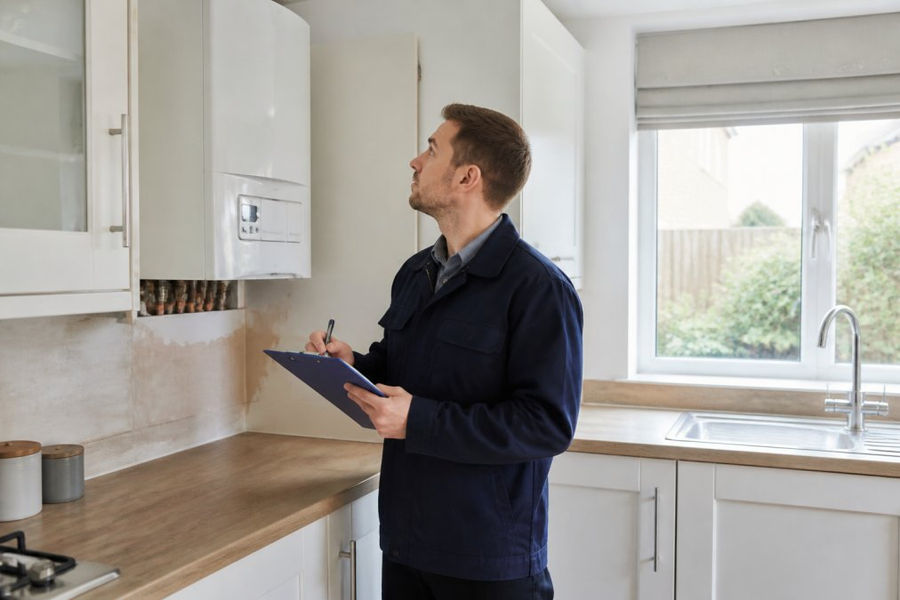
Build your checklist in three layers: monthly visual inspections (loose tiles, water stains, draft seals, appliance performance), seasonal deep dives (gutter clearing before autumn, heating checks before winter), and annual specialist reviews (boiler servicing, electrical safety, structural assessments).
Separate this into two documents: a tenant-visible schedule (what to report, inspection dates) and an internal operational checklist (contractor details, compliance deadlines, cost tracking).
Essential Appliance and System Checks
Boiler servicing is non-negotiable. A mid-January failure breaches landlord obligations and risks tenant loss. Schedule annual servicing in September and document every record, this protects compliance and demonstrates asset stewardship to future buyers.
Beyond the boiler, your checklist should include:
Electrical systems: annual EICR (Electrical Installation Condition Report) testing
Water systems: annual inspection for leaks, pressure issues, and corrosion
Gas appliances: annual safety checks and certification
Drainage: annual clearing and inspection for blockages or damage
Structural elements: annual visual inspection of cracks, damp, or settlement
Each has specific compliance windows and consequences. Missing an electrical safety check risks tenant safety, enforcement action, and insurance invalidation. A landlord property maintenance checklist that includes these non-negotiables keeps you compliant and protects your asset.
Seasonal Maintenance Tasks
Seasonal maintenance prevents weather damage. Autumn: gutters, downpipes, roof checks. Winter: heating verification, pipe insulation. Spring: external seals, window frames, drainage. Summer: ventilation, air conditioning, paintwork.
Property damage clusters around weather transitions: frozen pipes in late winter, rain exploiting autumn-compromised gutters, heat accelerating paint failure. Aligning maintenance to these cycles works with the property's stress points.
Document seasonal work with photos and contractor reports. This maintenance history demonstrates systematic protection to future buyers and lenders, commanding higher valuations due to lower risk profile. Consistent attention to these seasonal maintenance tasks ensures that your property remains in peak condition throughout the year, providing a reliable foundation for your ongoing records.
Statutory Compliance for Rental Properties
Statutory compliance is the mandatory foundation. Non-compliance risks tenant safety, enforcement action, fines, loss of rental income, and insurance invalidation.
Your statutory compliance checklist must include:
Gas Safety Certificate: annual testing of all gas appliances and pipework, required by law before a tenant moves in and annually thereafter
Electrical Installation Condition Report (EICR): at least every five years for new tenancies, annually for ongoing portfolios with multiple occupancy
Fire Safety: working smoke alarms on every level, regular testing and battery replacement, clear escape routes
Damp and Mould: regular inspection and remediation to prevent condensation-related health hazards, now a specific enforcement focus
Energy Performance Certificate (EPC): required before letting, updated when tenancy changes, increasingly scrutinised for E-rated and below properties
Legionella Risk Assessment: annual evaluation if the property has complex water systems or hasn't been occupied for extended periods
Furniture and Furnishings Fire Safety: all upholstered furniture must meet fire safety standards; non-compliant items expose you to criminal liability
Each has specific legal consequences. Gas Safety Certificates are enforced by the Health and Safety Executive; missing one invalidates insurance and risks prosecution with unlimited fines. Electrical safety (Electrical Safety Standards in the Private Rented Sector (England) Regulations 2020) and fire safety carry the same weight.
Automating Compliance Tracking and Documentation
The practical challenge is ensuring nothing lapses. Most landlords use spreadsheets or email reminders, systems that break down with multiple properties.
Modern compliance management uses three layers:
Layer 1: Automated Calendar and Alerts Build your compliance calendar with specific renewal dates. Gas Safety Certificates renew annually; EICRs every five years. Automate these into a shared calendar (Google Calendar, Outlook, or property management software) with 60-day alerts before expiry.
Layer 2: Smart Home Sensors for Continuous Monitoring Smart-home sensors provide continuous monitoring between inspections, particularly for damp and mould compliance. Humidity sensors (Eve Room, Meross Smart Thermostat) track condensation risk above 60%. Water leak detectors catch leaks immediately. Smart thermostats (Nest, Hive) flag boiler performance drops. Smoke alarm monitors send battery and trigger alerts. These don't replace statutory inspections but provide early warning systems that catch problems before they become breaches and demonstrate proactive monitoring to regulators.
Layer 3: Centralised Documentation and Audit Trail Compliance only protects you if you can prove it. Keep all certificates, inspection reports, and remediation records in a centralised, date-stamped digital system (cloud-based property management software or dedicated folder). When enforcement officers or insurers request proof, produce a complete audit trail with contractor details and remediation notes. Properties with this documentation are less likely to face enforcement action and more likely to retain insurance validity.
Compliance and Property Valuation
Compliance directly affects property value and lettability. Properties with current Gas Safety Certificates, valid EICRs, and documented damp remediation are more attractive to tenants and lenders. Lapsed compliance makes properties difficult to let, mortgage, and exposes them to enforcement action. Mortgage lenders routinely request compliance documentation and often require EPC ratings of D or above. Establish a compliance calendar with specific renewal dates, assign responsibility for contractor scheduling, document completion, and store everything centrally.
Cost-Effective Property Improvements That Boost Rental Yield
Cost-effective improvements deliver measurable return on investment. The highest-return upgrades are energy efficiency, kerb appeal, and modern appliances. Success depends on understanding financial mechanics: what you spend versus what you recover through increased rent, reduced vacancy, or faster sale.
Understanding Maintenance ROI: Cost vs. Rental Premium
A modern condensing boiler (£2,500-£3,500) reduces energy consumption by 15-20%, saving £180-£240 annually on a £1,200 heating bill. It justifies a £30-£50 monthly rental premium (£360-£600 annually), recovering installation costs in five years through combined energy savings and rental uplift.
Double-glazing (£4,000-£6,000 for eight windows) improves thermal efficiency by 25-30% and justifies a £40-£60 monthly rental premium (£480-£720 annually). The investment pays for itself in six years through rental uplift alone, before accounting for reduced maintenance.
A kitchen refresh (£5,000-£8,000) justifies a £60-£100 monthly rental premium (£720-£1,200 annually) with 5-7 year payback. Secondary benefit: modern kitchens reduce tenant turnover by 20-30%, lowering void periods and re-letting costs.
Linking Improvements to Energy Performance Certificate Ratings
Improvements that boost your EPC rating directly increase lettability and rental premium. An EPC rating of D or above is increasingly expected by tenants and required by many mortgage lenders. Properties rated E, F, or G face lettability challenges and regulatory pressure.
Upgrades that improve EPC ratings: boiler replacement (1-2 bands), loft/cavity insulation (1-2 bands), double-glazing (0.5-1 band), solar panels or heat pumps (1-3 bands). Each band improvement correlates with measurable rental premium: E to D typically commands 5-8% higher rent; D to C justifies 8-12% premium. Tenants increasingly search by EPC rating, and better-rated properties let faster and command higher yields.
Audit your current EPC rating, identify improvements that move you up one or two bands, and calculate payback based on rental premium. A £3,000 loft insulation upgrade moving you from E to D might justify a £40-£60 monthly rent increase, paying back in 5-7 years.
Prioritising Improvements: The Three-Tier Framework
Tier 1: Compliance and Safety (Non-negotiable) Gas safety, electrical safety, fire safety, damp remediation, boiler servicing. Cost: £1,500-£3,000 annually.
Tier 2: High-ROI Upgrades (3-7 year payback) Boiler replacement, double-glazing, kitchen/bathroom refresh. Generate rental premium and operational savings. Cost: £2,500-£8,000 per property.
Tier 3: Enhancement Upgrades (7+ year payback) Decorative improvements, landscaping, smart home, solar panels.
How Proactive Repairs Prevent Emergency Costs and Tenant Turnover
Proactive repairs are cheaper than emergency repairs by a factor of three to five. A £200 roof inspection catches a minor leak before it becomes £2,000 of water damage and drywall replacement. A £150 annual boiler service prevents a £1,500 emergency replacement in January. A £300 annual drainage inspection prevents a £3,000 emergency clearance and potential sewage backup.
Simplifying Preventative Maintenance Coordination
Preventative maintenance tips only work if they're actually executed. This is where coordination breaks down for most landlords. You have a checklist, but who's calling the contractors? Who's tracking completion? Who's verifying the work was done properly? Who's managing the invoice and ensuring it's paid?
Frequently Asked Questions
How does preventative maintenance impact long-term rental yield?
Preventative maintenance directly protects rental yield by reducing emergency repair costs, which can consume 10-15% of rental income if left unaddressed. Regular boiler servicing, damp prevention, and structural inspections keep properties in condition that attracts reliable tenants, reducing void periods. Properties with documented maintenance records command higher rents and experience lower tenant turnover, improving overall return on investment over 5-10 years.
What are the most cost-effective property improvements for landlords?
Energy efficiency upgrades deliver the strongest ROI: boiler replacement, loft insulation, and draught-proofing reduce tenant utility bills whilst lowering your liability for energy performance. Kerb appeal improvements (exterior painting, garden maintenance) cost little but significantly increase property appeal. Internal updates like modern kitchen fixtures and neutral décor improve tenant retention without major capital expenditure. Focus on repairs that prevent larger costs: fixing damp early, maintaining gutters, and servicing heating systems.
What are the legal requirements for property maintenance in the UK?
Landlords must comply with the Housing Act 2004, which requires properties to meet the Housing Health and Safety Rating System (HHSRS) standards. You must maintain structural integrity, prevent damp and mould, ensure safe electrics and gas appliances (with annual gas safety certificates), and provide working heating and hot water. Electrical installations require inspection every 5 years. Failure to meet these standards can result in enforcement action and fines. Documentation of all maintenance is essential for compliance records.
How often should a landlord conduct property inspections?
Schedule formal inspections at least twice yearly, ideally spring and autumn, to identify seasonal issues before they escalate. Monthly visual checks of external areas (gutters, drains, roof condition) prevent water damage. After tenant turnover, conduct a detailed property condition report to establish baseline for the new tenancy. Gas appliances require annual certification, and electrical installations need inspection every 5 years. Document all findings to demonstrate compliance and protect your asset.
Book a Call


Comments